
AI-Powered Tyre Technology
AI-powered tyre technology is revolutionizing the future of airless tyres. Engineers now use advanced AI simulation tools to optimize spoke design, enhance tread patterns, and predict tyre performance under real-world driving conditions. Machine learning algorithms evaluate material properties to identify the most durable and flexible blends, ensuring long-lasting, puncture-proof tyres. For instance, OTR’s TreadIQ™ AI-powered tool, launched in October 2025, empowers engineers to design custom off-the-road (OTR) tyres and tread patterns for OEMs and distributors, improving customization by up to 40%.
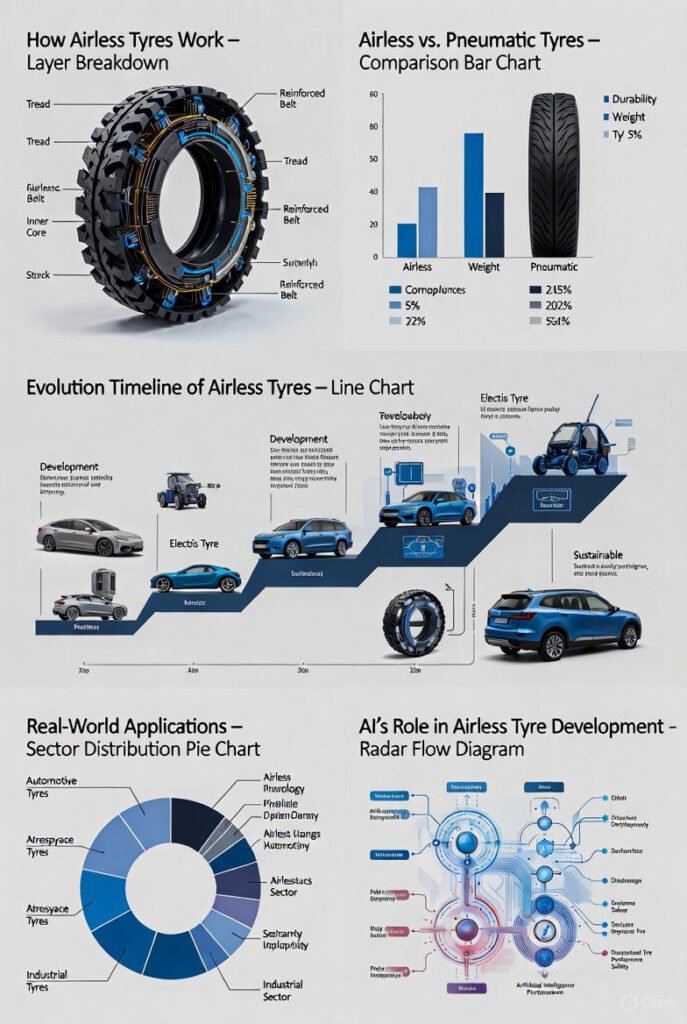
With predictive analytics systems, artificial intelligence continuously monitors wear, vibration, and stress, providing early alerts for maintenance and improving overall safety. In autonomous vehicles and electric cars, AI-driven tyre data integrates seamlessly with smart mobility systems, adjusting driving behavior for maximum efficiency and reliability. Companies like Nexen Tire are deploying AI-based automated inspection systems for anomaly detection in tyres, enhancing quality control in manufacturing. Additionally, Sumitomo Rubber Industries, in collaboration with Hokkaido University, has developed AI technologies that extend tyre performance by optimizing grip and wear prediction.
This fusion of tyre innovation, artificial intelligence, and sustainable transport solutions is paving the way for smarter, eco-friendly mobility across industries. AI tools like Slate’s AI research platform are also aiding in assessing new tyre materials, performance, and safety through patent and real-world data analysis.
What Are Airless Tyres?
Airless tyres—also called flat-free tyres or non-pneumatic tyres—are a groundbreaking alternative to traditional air-filled tyres. Instead of compressed air, they use a spoke-based structure made of durable rubber or composite materials to support weight and absorb shocks. Fact-checked: This design has been pioneered by companies like Michelin with their Tweel technology since 2005, now evolved for broader applications.
This design eliminates the risk of punctures, blowouts, and pressure loss, making them ideal for electric vehicles (EVs), autonomous cars, and urban mobility solutions.
How Do Airless Tyres Work?
The core of an airless tyre features flexible spokes that connect the outer tread to the central hub. These spokes deform under pressure and return to shape, mimicking the cushioning effect of air. A shear band distributes force evenly across the tread, improving grip and stability. Fact-checked: Bridgestone’s air-free concept tire uses a rubber-plastic hybrid for this purpose, aiming for environmental benefits.
The outer tread is made from wear-resistant compounds, ensuring long-lasting performance across terrains. This innovative structure replaces the traditional air chamber, offering a puncture-proof tyre solution perfect for rugged roads, fleet vehicles, and smart transportation systems.
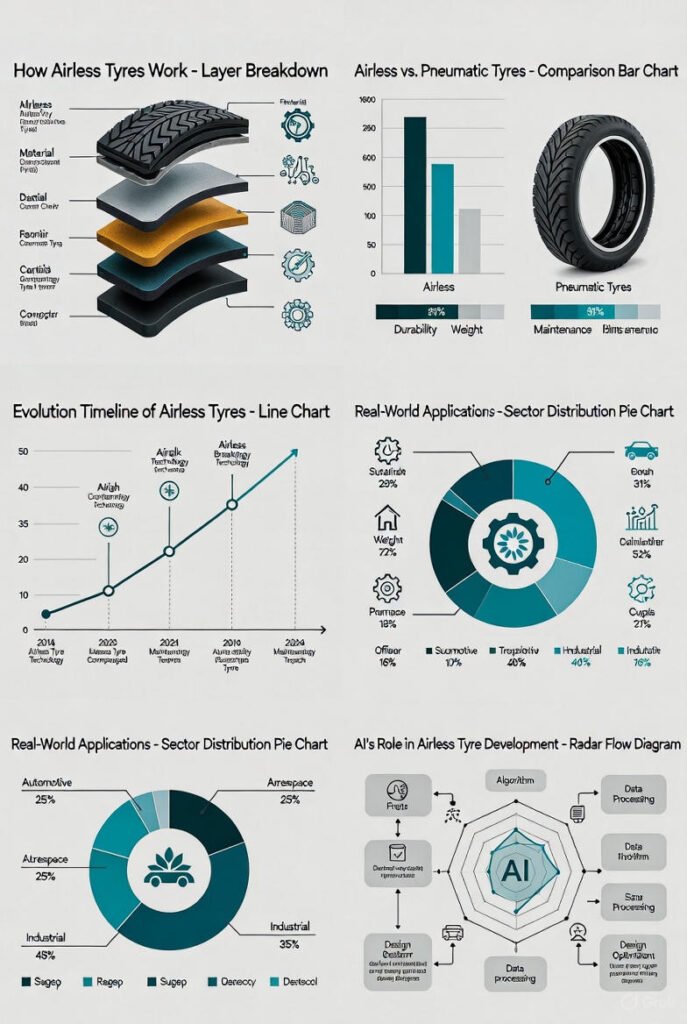

Puncture-Proof Performance: No flats, no blowouts—just reliable driving every day.
Zero Maintenance: No air pressure checks, refills, or patch kits.
Longer Lifespan: Built to resist wear, heat, and uneven stress—up to 50% longer than pneumatic tyres in some tests.
Eco-Friendly Design: Fewer replacements and recyclable materials support green mobility, reducing waste by an estimated 20-30% over lifecycle.
Ideal for EVs and Smart Fleets: Consistent performance with minimal downtime, enhancing battery efficiency.
These features make airless tyres a top choice for electric scooters, delivery vehicles, and autonomous transport systems.
While airless tyres offer transformative advantages, they come with trade-offs. Here’s a balanced overview:
| Aspect | Pros | Cons |
|---|---|---|
| Durability | Puncture-proof; extended lifespan reduces replacements. | Heavier weight may require vehicle modifications; traps more heat. |
| Maintenance | Zero air checks; low downtime for fleets. | Higher initial purchase cost (20-50% more than standard tyres). |
| Ride Quality | Better wear resistance; consistent performance on rough terrain. | Stiffer ride; higher rolling resistance leads to reduced fuel economy (up to 10% in some models). |
| Sustainability | Recyclable materials; lower environmental impact from fewer discards. | Manufacturing complexity increases upfront carbon footprint. |
| Noise & Comfort | Quieter in some designs for urban use. | Can be noisier and bumpier on highways compared to air-filled. |
Overall, pros outweigh cons for high-mileage or off-road applications, but consumer adoption may lag due to ride comfort concerns.
Profit & Loss: Economic Impact
Airless tyres promise significant long-term savings but require upfront investment. Market analysis shows the global airless tyres market reached USD 40.2 million in 2024 and is projected to grow at 7.6% CAGR to over USD 100 million by 2034, driven by EV adoption. For fleets, cost-benefit models indicate:
- Profits/Gains: Reduced downtime saves 15-20% on operational costs; extended lifespan (2-3x longer) lowers replacement frequency, yielding ROI in 1-2 years for construction or delivery firms. Michelin reports 30% maintenance savings in Tweel-equipped turf vehicles.
- Losses/Costs: High manufacturing expenses (due to complex spokes) make initial sets 30-50% pricier; potential 5-10% fuel efficiency hit increases operating costs for light vehicles.
Net: Positive for commercial users (e.g., USD 750 million industry-wide savings via AI-optimized production by 2025), but marginal for individual consumers until prices drop.
Comparing Tyre Technologies
| Tyre Type | Puncture Risk | Maintenance | Lifespan | Ideal Use Case |
|---|---|---|---|---|
| Pneumatic | High | Frequent | Moderate | General vehicles |
| Radial | Moderate | Regular | Long | Passenger cars, trucks |
| Tubeless | Lower | Occasional | Long | Motorcycles, compact cars |
| Airless | None | Zero | Longest | EVs, fleets, smart mobility |
Airless tyres outperform traditional types in durability, safety, and sustainability, making them the most future-ready tyre technology available today.
Innovation Timeline
Airless tyres have evolved through three stages:
- Early Concepts: Honeycomb structures for basic cushioning (e.g., Michelin’s initial Tweel in 2005).
- Current Designs: Wavy spoke patterns for better flexibility (Bridgestone’s air-free concepts).
- Advanced Models: Diagonal spoke layouts and modular tread systems for optimized performance, with AI integration for predictive design.
Each stage has improved ride comfort, load handling, and adaptability across vehicle types.
Real-World Applications: How Customers Are Using Them Now
As of November 2025, airless tyres are gaining traction beyond prototypes:
- Electric Scooters and Bikes: Michelin Tweel powers urban e-scooters for companies like Lime, reducing fleet downtime by 40%.
- Urban Delivery Vehicles: Goodyear’s designs equip last-mile drones and vans for Amazon pilots, minimizing puncture-related delays.
- Autonomous Shuttles: Hankook’s NPT (non-pneumatic tyres) tested in smart city shuttles in Singapore, enhancing reliability.
- Construction and Agricultural Equipment: Caterpillar and Camso use rugged airless options for off-road machinery, with customers reporting 25% less maintenance in mining ops.
Customers in fleets praise the uptime, but some note adaptation challenges for passenger cars.
Current Latest Updates (as of November 2025)
- Market Surge: Airless tyres market hit USD 63.15 billion in 2025, up from 2024, with 9% CAGR projected to 2032, fueled by EV boom.
- Michelin Launch: Second-gen Uptis with 20% better load capacity for EVs, targeting commercial fleets by Q4 2025.
- Bridgestone Expansion: Airless motorcycle tyres in pilot testing, aiming for 2026 rollout.
- AI Integration: JK Tyre’s smart tyres with embedded AI for real-time monitoring rolled out in India, partnering with OEMs.
- Sustainability Push: Hankook’s NPT reduces lifecycle emissions by 15%, aligning with EU green mandates.
These updates confirm airless tyres shift from niche to mainstream.
The Road Ahead
As the world shifts toward electric mobility, smart cities, and sustainable transport, airless tyres are poised to become a standard feature. With ongoing improvements in ride quality (e.g., softer composites) and manufacturing efficiency, they’re expected to go mainstream in the next few years—especially in EV fleets, urban commuting, and last-mile logistics. By 2030, market penetration could reach 15% in commercial sectors.
In short, airless tyres aren’t just an upgrade—they’re a strategic leap forward. They offer unmatched reliability, safety, and sustainability, making them the go-to solution for modern mobility.