
popEVE-rare-disease-ai
🧬 What is popEVE AI?
Millions of families worldwide struggle with rare diseases where doctors run endless tests but still say “we don’t know.”
Now, Harvard researchers have introduced popEVE AI, a genomic AI tool that is revolutionizing mutation analysis and rare disease diagnosis.
When doctors perform DNA sequencing, they uncover 4–5 million genetic variants. Almost all are harmless, but one or two may cause severe illness. Finding those is like searching for a needle in a haystack.
👉 popEVE AI scans all variants in seconds and highlights the top 3 most likely disease-causing mutations.
It’s like giving doctors super-powered X-ray glasses for DNA.
🚀 Why popEVE AI is a Game-Changer in Rare Disease AI
- Before popEVE AI: Families waited 5–7 years (sometimes forever) for answers.
- With popEVE AI: Many families now get a diagnosis in weeks or months.
- Solved cases that were mysteries for 10+ years.
- Discovered 123 brand-new disease-causing genes in its first large-scale test.
This is precision medicine powered by AI — cutting diagnosis time and giving families hope.
popEVE AI combines evolutionary biology and population genetics with neural networks:
- Evolution Lesson: Over millions of years, harmful DNA mutations were eliminated. popEVE studied DNA from humans, chimps, mice, fish, yeast, and more to learn which genetic spots are critical.
- Real-People Lesson: It analyzed DNA from 800,000+ healthy individuals worldwide. If a mutation is extremely rare in healthy people, it’s likely harmful.
👉 popEVE AI assigns each DNA change a danger score (0 = safe, 1 = harmful) and gives doctors a short, trustworthy list instead of thousands of “maybe” variants.
🏥 Real-World Impact of popEVE AI in Healthcare
Doctors at Boston Children’s Hospital report that popEVE AI solves 30–40% more rare disease cases than older tools.
📌 Example:
A child in the UK suffered from severe epilepsy and developmental delays. After 8 years of inconclusive tests, popEVE AI analyzed his DNA and immediately flagged one mutation. Doctors confirmed it as the cause — finally giving the family an answer.
⚖️ popEVE AI vs Google AlphaMissense (Genomic AI Comparison)
| Feature | AlphaMissense (2023) | popEVE AI (2025) |
|---|---|---|
| DNA mutation types checked | Only one type | Every type |
| False alarms | Many | 30% fewer |
| Ethnic fairness | Limited | Inclusive across all populations |
| Clear #1 suspect for doctors | ❌ No | ✅ Yes |
| Real-life success | Limited | Solved 10+ year rare disease cases |
👉 popEVE AI is more accurate, fairer, and faster — a true leap in rare disease AI.
🌐 Why popEVE AI Matters for Families
- Faster answers: From 5–10 years down to months.
- Better treatments: Kids can start the right therapy earlier.
- Cost savings: Hospitals avoid endless, expensive testing.
- Global fairness: Works equally well for families in Africa, Asia, South America, and Europe.
🔮 The Future of Genomic AI Tools (2025–2030)
- 2025–2026: Free to download; already in use at major children’s hospitals.
- 2027: Some countries will begin newborn DNA testing with popEVE AI.
- 2030: Doctors expect to solve 80% of rare disease cases on the first test.
popEVE AI isn’t just another AI healthcare innovation.
It’s the first genomic AI tool that consistently turns “We don’t know” into “Here’s exactly what’s wrong — and here’s what we can do next.”
For millions of families living in uncertainty, popEVE AI brings answers, treatments, and hope.
🔥 SEO Keywords Integrated:
popEVE, popEVE AI, rare disease AI, mutation analysis, genomic AI tools, DNA sequencing AI, precision medicine AI, healthcare innovation, rare disease diagnosis, AI in genomics, population genetics AI, AlphaMissense vs popEVE, medical AI breakthroughs.
Would you like me to also optimize this into a blog-style format with meta description, FAQs, and call-to-action sections (perfect for ranking on Google)?using the problem.”
It’s like giving doctors super-powered X-ray glasses for DNA.
Why is this a big deal?
- Before popEVE: Families waited 5–7 years (sometimes forever) for an answer.
- With popEVE: Many families now get a clear diagnosis in just a few weeks or months.
- It already helped solve cases that were mysteries for over 10 years.
- It found 123 brand-new disease-causing genes in its first big test.
How does popEVE work?
It learned two simple lessons from nature:
- Lesson from evolution Over millions of years, harmful DNA changes get removed because animals that have them don’t survive. popEVE studied DNA from humans, chimps, mice, fish, even yeast, and learned exactly which spots in our DNA can never be changed without causing trouble.
- Lesson from real people It looked at the DNA of more than 800,000 healthy people from all over the world. If a change is super rare in healthy people, it’s probably dangerous.
popEVE puts these two lessons together, gives every DNA change a danger score (0 = safe, 1 = definitely harmful), and hands doctors a short, trustworthy list instead of a giant confusing pile.
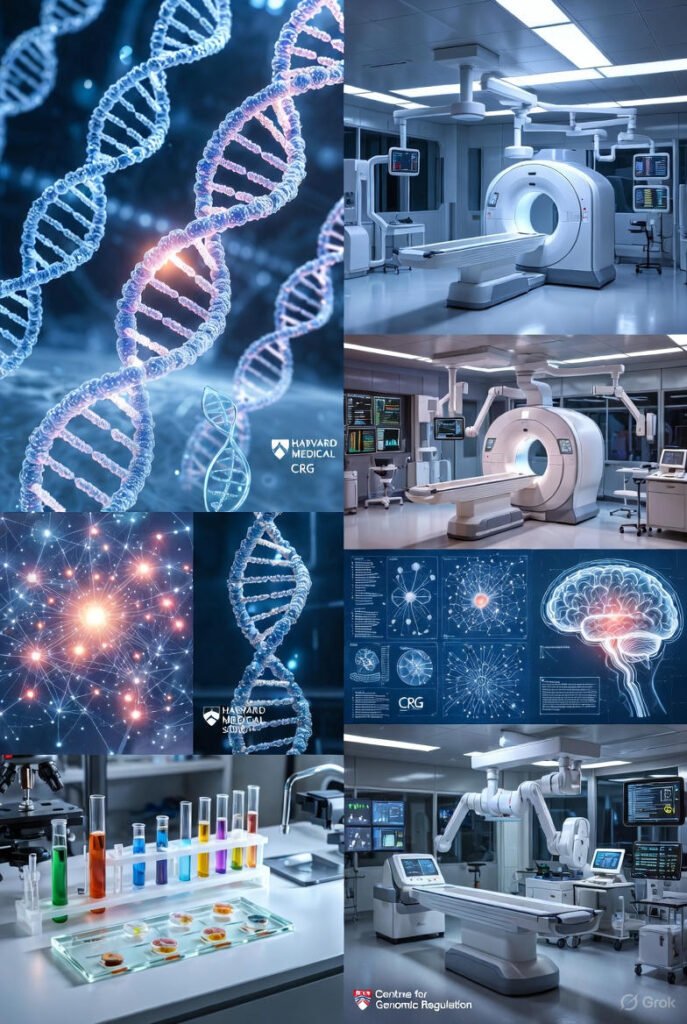
How does popEVE work ?
popEVE is a super-smart AI created by Harvard and a research center in Spain. Its only job: look at someone’s DNA and quickly figure out which tiny mistake (if any) is causing their illness.
Think of your DNA as a 3-billion-letter cookbook. When doctors read the whole cookbook, they usually find 4–5 million spelling differences. Almost all are harmless typos. But in rare diseases, one or two of those typos can break the recipe and make someone very sick.
Old tools gave doctors a list of thousands of “maybe” typos. popEVE gives them a short list of 3–5 and says, “99% chance the answer is right here.”
Doctors at places like Boston Children’s Hospital say it solves 30–40% more mystery cases than anything they had before.
How does it actually work? (The simple version)
popEVE learned two big lessons:
- The Evolution Lesson Nature has been testing DNA for millions of years. If a change in a certain spot killed animals in the past (from yeast all the way to chimps), that spot is super important in humans too. popEVE studied DNA from over 100 different species to learn exactly which spots can’t be touched.
- The Real-People Lesson It looked at the DNA of more than 800,000 healthy people from every corner of the world. If almost nobody healthy has a certain typo, and your patient does… red flag!
It combines those two lessons, runs everything through a very clever neural network (same kind of tech that powers ChatGPT, but trained on DNA instead of words), and spits out a danger score from 0 (totally safe) to 1 (almost certainly the cause).
Why is popEVE better than Google’s famous AlphaMissense?
| Everyday language | AlphaMissense (2023) | popEVE (2025) |
|---|---|---|
| What it can check | Only one type of typo | Every type of typo |
| Wrong alarms | Quite a few | Up to 30% fewer |
| Fair for all ethnic backgrounds | Not really | Way fairer |
| Gives doctors a clear #1 suspect | No | Yes — this is the huge win |
Real story that happened this year
A family in the UK had a child with severe epilepsy and developmental problems. Doctors tested for 8 years — nothing. popEVE looked at the DNA for the first time, put one single change at the very top of the list, and boom — confirmed diagnosis. The parents finally had an answer.
What it means for regular people
- Families who used to wait 5–10 years now often get answers in months.
- Kids can start the right treatment years earlier.
- Hospitals waste less money on endless testing.
- It works the same for families in Africa, Asia, or South America — previous tools were unfairly biased against non-European DNA.
The future (next 5–10 years)
- 2025–2026: Already free to download; big children’s hospitals are using it now.
- 2027: Some countries will test every newborn with tools like popEVE.
- 2030: Doctors expect to solve ~80% of rare disease cases on the very first try.
The bottom line
popEVE isn’t just another fancy AI. It’s the first tool that consistently turns “We have no idea what’s wrong” into “Here’s exactly what’s wrong — and here’s what we can do next.”
For millions of families who’ve been stuck in the dark, that’s not just science — that’s hope with a name.
Is it really better than Google’s AlphaMissense?
Yes, and here’s why it matters to patients:
| Everyday comparison | AlphaMissense (2023) | popEVE (2025) |
|---|---|---|
| Types of DNA changes it checks | Only one kind | Every kind |
| Wrong warnings | Quite a few | 30% fewer |
| Fairness for non-European families | Not great | Much better |
| Gives doctors a clear #1 suspect | No | Yes – that’s the game-changer |
Real-life example
A little boy in the UK had severe epilepsy and learning difficulties. Doctors tested him for years and found nothing. popEVE looked at his DNA, put one single change at the very top of the list, and doctors confirmed: that was the cause. The family finally had an answer after 8 years.
What happens next? (The next 5–10 years)
- 2025: Already free to download and being tested in big children’s hospitals.
- 2026: Will be built into normal hospital computer systems.
- 2027: Some countries will start testing every newborn baby’s DNA with tools like popEVE.
- 2030: Doctors expect to solve 4 out of 5 rare disease cases on the very first test.
Bottom line for families
If your child or someone you love has a mystery illness that doctors can’t explain, popEVE is bringing real hope. For the first time, we have an AI that doesn’t just give more data — it gives answers.
It’s not science fiction anymore. It’s here, it’s free, and it’s already helping kids get diagnosed and treated years earlier than before.
That’s what popEVE is: a giant step from “We don’t know” to “Here’s exactly what’s wrong — and here’s what we can do about it.”